On this page
Do You Pay Tax on Vinted and eBay Sales in the UK? The £1,000 and 30-Sales Rules
Independent analysis from live listing data.
Selling your own things is different from buying to sell. What the £1,000 trading allowance and the 30-item platform report mean, from GOV.UK, in plain English.
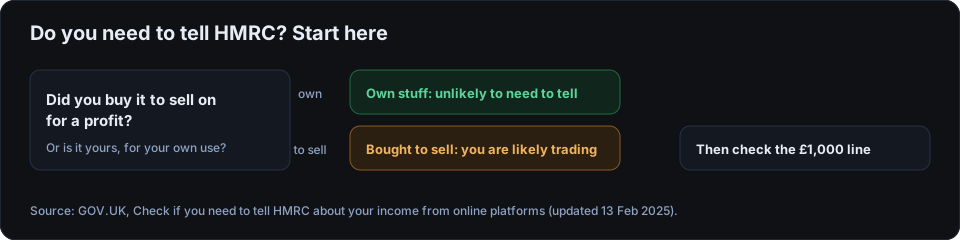
There is no new tax for selling online. Selling your own unwanted things is unlikely to need reporting, however many items you sell. If you buy things to sell on for a profit, you are likely trading, and you need to tell HMRC once your trading income passes the £1,000 allowance in a tax year (6 April to 5 April).
Selling your own things vs. buying to sell
GOV.UK draws the line at intent. Personal possessions are items that belong to you for your own use. You are probably trading if you sell goods that you bought intending to resell at a profit.
That is why a clear-out of your wardrobe and a flipping habit are treated differently, even when they happen on the same app. The question is not how many items you sell but why you got them.
What is the £1,000 trading allowance?
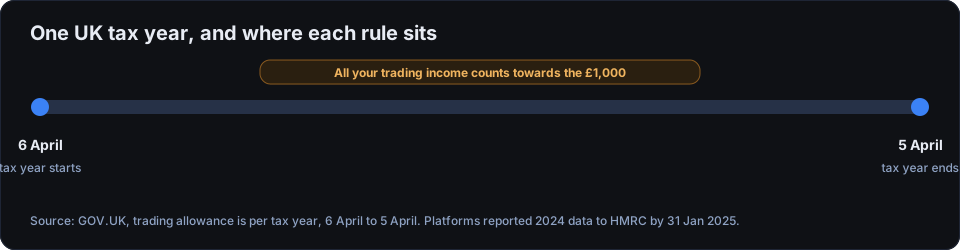
If your total income from trading is more than the £1,000 trading allowance for the tax year, you need to tell HMRC about it. The tax year runs from 6 April to 5 April, and HMRC's Tax Help for Hustles page says you have a single £1,000 allowance for each tax year, with every side hustle counting towards it, not one per site.
HMRC's Tax Help for Hustles page says the £1,000 is the amount you earn before expenses and is not the same as profit, so a running total of what you take in matters from the first sale of the year. A simple record of what you bought, what you sold and when is enough to start; see reseller record keeping basics.
What does 30 sales have to do with it?
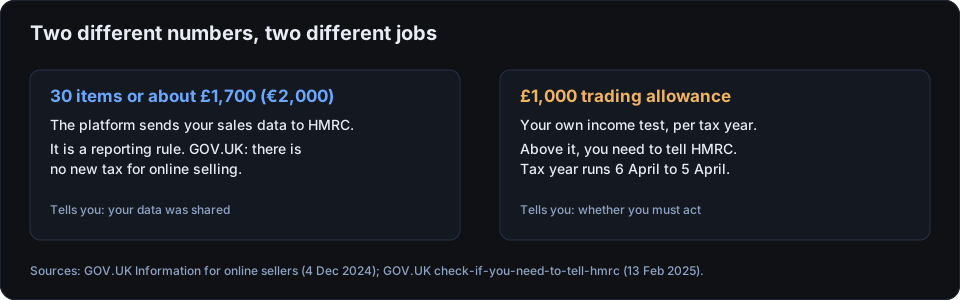
Online platforms must share sales data with HMRC for sellers who sold at least 30 items, or earned roughly £1,700 (€2,000), in the year. GOV.UK's notice says the platform will tell you if your information was included, and states plainly that there is no new tax for online selling.
So the 30-item figure is about what the platform reports, not about what you owe. The £1,000 allowance is your own test. You can be reported and owe nothing, and you can be under 30 sales and still have trading income to declare.
What to do now
Work out which side of the line you are on: your own things, or goods bought to sell. If it is the second, keep a running total of income and cost per item for the tax year. Check GOV.UK for how to register and when to report, since those steps and dates are set by HMRC, not by this guide.
If your situation is unclear, ask HMRC or an accountant. If you want to know what an item is worth before you buy it to resell, check any item in the free item checker.
A buyer disputing an item? Free dispute evidence kit →
Frequently asked questions
Do I have to pay tax on Vinted sales in the UK?
Not if you are selling your own unwanted things; GOV.UK says that is unlikely to need reporting however many items you sell. If you buy goods to sell on for a profit you are likely trading, and you need to tell HMRC once trading income passes the £1,000 allowance in a tax year.
Is the £1,000 trading allowance per platform?
No. HMRC's Tax Help for Hustles page says you have a single £1,000 allowance for each tax year, and anything you earn from different side hustles counts towards it.
What happens if I sell 30 items on Vinted or eBay?
Platforms must share sales data with HMRC for sellers with at least 30 items or about £1,700 (€2,000) in the year, and they will tell you if you were included. GOV.UK says there is no new tax for online selling.
When does the UK tax year start and end?
It runs from 6 April to 5 April.
Know before you buy.
Resale IQ turns 4M+ listing records into one answer: BUY, WATCH, or SKIP — with buy-below price and best sizes.
Check this item →Type a brand and model. Buy-below is on a plan.